Albania
 Bosnia and Herzegovina
 Bulgaria
 Croatia
 Cyprus
 Czech Republic
 Denmark
 Estonia
 Germany
 Hungary
 Italy
Italy
 Kosovo
 Lithuania
 Latvia
 Luxembourg
 Macedonia
 Montenegro
 Poland
 Portugal
 Romania
 Serbia
 Slovaki
 Slovenia
 Spain
Spain
 Switzerland
 Sweden
 Turkey
 United Kingdom
 UAE
UAE
 Hong Kong
 Kuwait
 Lebanon
 South Africa



Stem Cell Collection and Processing
Introduction
Stem cell collection is the process of harvesting healthy blood stem cells for medical treatments or transplants. This guide is for expectant parents and families considering private cord blood and cord tissue banking. Understanding the collection process helps families make informed decisions about their child’s future health options. Cord blood banking involves the collection, processing, and long-term storage of umbilical cord blood. While this guide focuses on umbilical cord blood collection, it is important to note that stem cells can also be collected from peripheral blood or bone marrow. There are three main collection methods: Peripheral Blood Stem Cell collection, Bone Marrow collection, and Umbilical Cord Blood collection.
Stem cell collection is a simple, safe, and non-invasive procedure carried out immediately after birth: once your baby’s cord has been clamped and cut, a trained specialist collects the remaining blood and tissue from the umbilical cord for processing and long-term cryogenic storage. For expectant parents and families considering private cord blood and cord tissue banking, this guide explains how collection works, what happens in the laboratory, how samples are tested and stored, and the standards used to keep them safe and clinically usable.
The collection itself takes only a few minutes, is completely painless for both mother and baby, and does not interfere with your chosen birth plan. Importantly, the procedure is compatible with delayed cord clamping, so you can still enjoy those first precious moments with your newborn while preserving stem cells that may support future transplants, regenerative medicine, and other developing therapies.
Your sample is then carefully sealed, documented, and transported under controlled conditions to our laboratory for processing, quality testing, regulatory-compliant handling, and cryogenic storage.
Note on Stem Cell Collection Methods
While this guide focuses on umbilical cord blood collection, stem cells can also be collected from peripheral blood or bone marrow. There are three main collection methods: Peripheral Blood Stem Cell collection, Bone Marrow collection, and Umbilical Cord Blood collection.
A healthy future can be planned – it only takes five easy steps
Cord blood banking is a straightforward process and an important part of planning long-term stem cell storage in the UK. Here are the five easy steps to collect, process, and store your baby’s stem cells:
-
1
Step 1: Order your stem cell collection kit
Order online or by calling 01895 424430, and complete a consent form before stem cells are collected for storage. -
2
Step 2: Inform your phlebotomist
In the UK, a trained and licensed phlebotomist from a dedicated service will perform the collection.
A trained and licenced phlebotomist will perform the collection. Liaise with them directly to ensure they attend the hospital to take the cord blood sample from the umbilical cord after birth. The process is quick, non-invasive, and delayed cord clamping compatible.
Cord tissue can also be very easily isolated from a section of the umbilical cord collected at birth. -
3
Step 3: Your kit is collected
Once your baby’s sample has been collected, call Smart Cells. They will send a courier to collect and transport the sample to the laboratory near Heathrow Airport.
Every cord blood (CB) and cord tissue (CT) sample is transported to the laboratory as quickly as possible in approved, validated, and temperature monitored transit containers to preserve the stem cells during this process. -
4
Step 4: Samples are processed
Your baby’s sample is tested, processed, and cryogenically frozen at the laboratory using a high-efficiency technique called sedimentation with HES (hydroxyethyl starch).
Samples are safely stored in vapour phase nitrogen at temperatures so low all metabolic processes of the cells cease. When correctly handled, these cells can be thawed and restored to grow and multiply in a patient undergoing transplant treatment. -
5
Step 5: Samples are stored for 25 years
Smart Cells will call you to confirm the successful storage of your baby’s sample. This sample will be stored safely for 25 years.
Stored stem cells may also become useful in the future if new treatments are developed for additional diseases, and they are also being studied for potential use in repairing heart muscle and supporting research.
Next, we explain our precise processing methodology.
Our Processing Methodology
At Smart Cells, precision and reliability are at the heart of how we prepare every sample. For over two decades, we have perfected a high-efficiency technique called sedimentation with HES (hydroxyethyl starch) — a gold-standard method proven in hundreds of thousands of cord blood collections worldwide.
Step-by-Step: How We Process Your Baby’s Cord Blood
-
1
Careful Separation
Using sedimentation and centrifugation, cord blood is reduced in volume and divided into its main components — plasma, red blood cells, and white blood cells. -
2
Isolating the Buffy Coat
The “buffy coat”, the fraction rich in white blood cells and stem cells, is isolated for long-term preservation. This ensures we retain the most therapeutically valuable portion of your baby’s cord blood, helping preserve enough stem cells for potential future therapeutic use whenever possible. -
3
Secure Cryogenic Preparation
The stem cell-rich sample is placed into a clinical-grade storage bag, sealed in a protective metal cassette, and cooled gradually using a computer-controlled freezing system. Once the sample reaches –160°C, it is transferred into a cryogenic tank, where it is maintained at –196°C in nitrogen vapour. This environment is scientifically proven to preserve stem cell viability for decades.
Now that you know how we process your baby’s cord blood stem cells, let’s look at the rigorous quality testing we perform to ensure safety and clinical readiness.
Rigorous Quality Testing
- Total Nucleated Cell (TNC) count – overall measure of cell content
- CD34+ stem cell count & viability – key indicator of usable stem cells
- Microbiological screening – ensures sterility and safety
- Maternal blood testing – checks for infectious diseases through blood tests for required viruses, including hepatitis b, hepatitis c, human immunodeficiency virus (HIV) , syphilis, human T lymphotropic virus (HTLV), and cytomegalovirus (CMV) which must be completed within 7 days of collection, in line with Human Tissue Authority tissue storage regulations
Stem cell collection methods vary depending on the source. For peripheral blood, collection uses apheresis—also called leukapheresis—and is typically performed through a central line or cannula. By contrast, bone marrow collection involves a needle inserted into the hip bone, and around one to two quarts of marrow may be harvested.
After quality testing, it’s important to understand why our method matters for bone marrow transplant and other clinical uses.
Why This Method Matters for Bone Marrow Transplant
- Higher recovery rates – Sedimentation with HES consistently delivers more viable stem cells than many automated systems.
- Clinically proven – This methodology has been used in transplants at leading medical centres worldwide with outstanding results, with the strongest evidence for hematopoietic stem cell transplants as standard treatments for blood cancers and for treating various blood and immune disorders, much like bone marrow stem cells used to restore blood cell production after intensive therapy.
- Trusted by science & families alike – With Smart Cells’ experience and FamiCord’s global network, families benefit from one of the most reliable processing systems available today, although regulators caution that many advertised stem cell treatments outside these established uses still lack strong clinical evidence.
To ensure the highest standards, we maintain strict quality assurance and testing protocols.
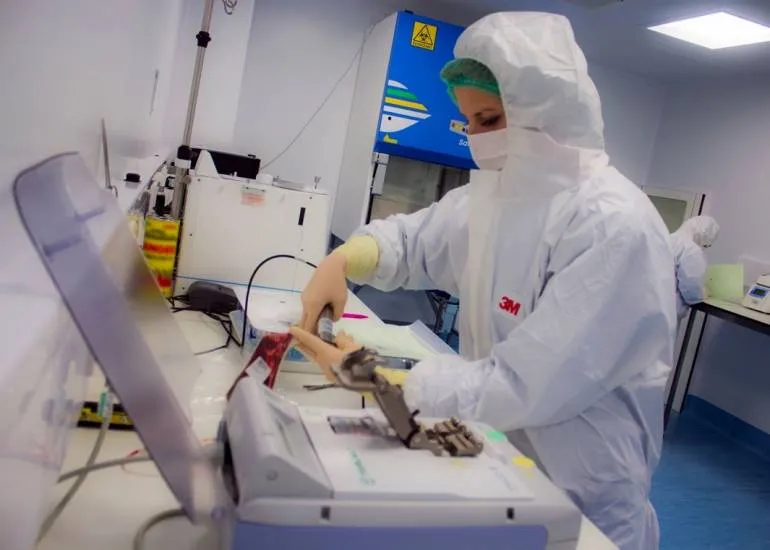
Quality Assurance and Testing
All samples are fully traceable throughout the journey, including testing, receipt, processing, cryopreservation, storage, and release for treatment if required.
Samples are tested and validated for sterility in accredited UK NHS laboratories.

Cord blood
All samples are tested in-house for full blood and viable CD34 stem cell counts. Processing and cryopreservation procedures are validated at least twice annually by thawing test aliquots to check cell numbers and viable cell recovery. Smart Cells participates in independent UK External Quality Assurance Schemes (NEQAS) to ensure these tests are accurate.

Cord tissue
Following processing, small test segments are reserved for each sample. Representative segments are sent to an independent laboratory for viability and cell culture testing, and immunophenotyping which checks the type of stem cells in the tissue. These validation tests are run at least twice per year and can be arranged should a sample be proposed for use.
FAQ
- Who collects the samples?
- Can I still have my stem cells collected if I have a home birth?
- Can I wait for the placenta to deliver naturally?
- What is an HLA test and how is it used?
- Do I need to store the cord blood and tissue stem cells in the country I intend to use it?
- Why do Smart Cells volume reduce process cord blood before storage?
- Does my hospital allow me to have stem cells collected?
- Does it matter if the birth is caesarean section or natural delivery?
- Does cord blood and tissue collection hurt?