
Why store stem cells?

What are umbilical cord blood stem cells used for?

Transplant
A cord blood stem cell transplant can replace diseased cells with healthy new cells and rebuild an individual’s blood and immune system. More recently, cord blood stem cells have been shown to form other tissues such as nerve and bone cells.

Potential
Cord blood stem cells have considerable potential in regenerative medicine. Research has shown these cells can develop into a range of cell types such as nerve, bone, skin, heart, and liver cells. They have also been shown to stimulate the body’s own repair systems.

Future
These exciting developments have already translated into early clinical treatment of ischaemic heart disease and some neurological conditions. The future of regenerative medicine holds much promise, and cord blood is likely to play a major part in the advancement of our ability to treat human disease.
Cord blood stem cells fight illness and disease
Storing stem cells from your baby’s umbilical cord opens up a range of treatment options for more than 80 conditions. Clinical trials are underway on many more, including COVID.
Umbilical cord blood and tissue compared: a current and future perspective
It is well recognised that stem cells from cord blood and cord tissue have remarkable therapeutic potential, however the types of cells differ in each product.
How are cord blood and cord tissue collected and stored?
Cord blood banking involves collecting and cryogenically freezing the blood from within the umbilical cord after birth. In cord tissue banking, small segments of the umbilical cord are collected, cryopreserved and stored.
Cord blood stem cells are well accepted in clinical use
Cord blood contains haematopoietic (blood-making) stem cells, and has been successfully used for over 25 years in the treatment of 80+ conditions including blood and bone marrow disorders such as leukaemias and anaemias, immune deficiencies and certain genetic disorders (1). Cord blood from a child itself, or from a sibling has the amazing potential to restore the bone marrow, blood and immune cell systems following chemotherapy. If sibling cord blood is used, then the donor cells may also have the ability to attack cancer cells remaining in a patient or replace a bone marrow deficiency with healthy cells after chemotherapy. The first cord blood transplant, which was undertaken in 1988, set the scene for the remarkable success story of this treatment option. An interview with Matthew Farrow who received this pioneering cord blood transplant can be read here (2).
Cord blood stem cells in regenerative medicine
In recent years, cord blood has also shown potential in the field of regenerative medicine and is undergoing clinical trials in the treatment of different conditions such as autism, cerebral palsy, diabetes and stroke. The benefit of cord blood in regenerative therapies has been attributed to the presence of non-hematopoietic cells called mesenchymal stem cells (MSCs) within the cord blood.
Regenerative power of cord tissue stem cells
Although cord blood contains MSCs, the Wharton’s jelly layer inside cord tissue has been shown to be exceptionally rich in these particular stem cells. This means that cord tissue banking for future regenerative cellular therapeutics is particularly relevant. MSCs are key players in this field as they help to heal or regenerate injured or diseased tissues. They have the ability to differentiate into certain different cell types. However, more importantly, they Cord blood/tissue comparison 11/2021 Dr Ann Smith Smart Cells can damp down harmful immune processes, they possess the anti-inflammatory potential and also produce a range of proteins that can promote healing of damaged tissues at the site of injury.
The possible uses of MSCs, such as those that are abundant in cord tissue, are showing encouraging results in clinical trials. They are being used to treat cardiac disease, neural and spinal cord injuries, skeletal injuries, skin wounds, autoimmune and inflammatory diseases to name a few (3, 4, 5).
Clinical trials using cord tissue
As of April 2020, there were 155 clinical trials listed worldwide using MSCs from cord tissue. The Polski Bank Komorek Macierzystych (PBKM) with which Smart Cells is affiliated, is a leading provider of MSCs from cord tissue. By March 2021, PBKM had supplied MSCs from cord tissue Wharton’s jelly for the treatment of 1687 patients on registered clinical trials. Very recently, the intravenous transplantation of MSCs sourced from cord tissue has been shown to be safe and effective in the treatment of critically ill patients with COVID-19 pneumonia (6).
Present and future
Although cord blood and tissue stem cells do share some benefits, each has many advantages of their own. We are living in an exciting era in modern medicine. Both cord blood and cord tissue are being used in a wide variety of established and cutting-edge treatments that hold promise for important and unprecedented developments in stem cell therapeutics (7, 8).
References
- https://www.frontiersin.org/articles/10.3389/fped.2020.570282/full
- https://parentsguidecordblood.org/en/news/interview-matt-farrow-recipientworlds-1st-cord-blood-transplant 3. https://stemcellres.biomedcentral.com/articles/10.1186/s13287-020-02011-z
- https://www.researchgate.net/publication/338896676
- https://www.hindawi.com/journals/bmri/2015/430847/
- https://stemcellres.biomedcentral.com/articles/10.1186/s13287-020-01725-4
- https://www.smartcells.com/can-stem-cell-therapy-help-to-treat-covid-19-patients/
- https://parentsguidecordblood.org/en/news/how-many-clinical-trials-use-cordblood-or-cord-tissue
- https://www.futuremedicine.com/doi/full/10.2217/rme-2017-0066

Cancer
Acute Leukaemia
Chronic Leukaemia
High-Risk Solid Tumors
Hodgkin & Non-Hodgkin Lymphoma
Myelodysplastic Syndromes

Blood disorders
Aplastic Anaemia
Beta Thalassemia
Diamond-Blackfan Anaemia
Fanconi’s Anaemia
Sickle Cell Disease

Neurological disorders*
Traumatic Brain Injury
Cerebral Palsy
Hypoxic Ischemic Encephalopathy (HIE)
HSV Encephalitis & NMDA Receptor
Antibody Encephalitis

Immune disorders
Chronic Granulomatous Disease
Hystiocytic Disorders
Leukocyte Adhesion Deficiency
Severe Combined Immunodeficiency
Wiskott- Aldrich Syndrome

Metabolic disorders
Krabbe Disease
Hurler Syndrome
Metachromatic Leukodystrophy
Sanfilippo Syndrome
Hunter Syndrome
Cord Tissue
The future of cord tissue stem cell therapy is promising. Cord tissue stem cells can form a number of different tissue types and their therapeutic value for a wide range of diseases is growing.
Reports by leading scientists have also shown the Wharton’s Jelly of the umbilical cord (the gelatinous tissue in the cord) is a rich source of a different but equally important type of stem cell.
How can cord tissue stem cells help your child?
Cord tissue holds different cells to those found in umbilical cord blood – and many trials are underway into how these cells can treat other diseases and conditions such as osteoarthritis, cardiovascular disease, diabetes, and autoimmune disorders. By preserving both tissue and cord blood, your family will have the widest array of treatment options available.
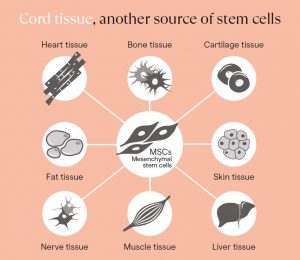
Cord tissue has been shown by researchers to be particularly rich in mesenchymal (MSC) precursor cells that have the ability, under the right conditions, to differentiate into different cell types such as bone, cartilage, nerve, adipose, cardiac, smooth muscle, hepatic and skin cells and are therefore extremely promising in regenerative medicine.
They have also been shown to be capable of producing certain proteins that can help to repair damaged tissues and can reduce inflammation.

1,800+ cord tissue units released from our group for transplantation

Store up to 16 segments of cord tissue for each customer

Our group owns two laboratories which fulfil the Good manufacturing practice (GMP) standards required by European Medicines Agency

We are the only family bank in Europe, of which the cord tissue stem cells are used extensively in therapies, which means procedures used in our laboratories are Therapy Approved
FamiCord Group goes an extra mile not only to freeze and storage a cord tissue stem cells, but also to prepare the advance therapy medicinal product when needed. Advanced therapy medicinal products (ATMPs) are medicines for human use that are based on genes, tissues or cells. They offer groundbreaking new opportunities for the treatment of disease and injury.
FAQs
Smart Cells has an HTA licence which covers procurement, testing, processing, storage, import, release, and export of cord blood cells and tissue. Smart Cells has ISO9001:2015 certification, and participates in the UK National External Quality Assessment Service (NEQAS) quality assurance scheme for full blood and CD34 cell counting.
Smart Cells takes ongoing Quality Assurance very seriously, with a rigorous programme of validating and auditing all critical practices and procedures. Fully trained and experienced staff operate according to validated procedures. The Smart Cells laboratory technical team are educated to degree and post graduate degree level in relevant biomedical sciences and use globally recognised techniques and technologies in the state-of-the-art processing facility.
The Smart Cells approach to ongoing Quality Assurance, regulatory compliance, integrity, and transparency is supported and overseen by the Scientific Director, Head of Laboratory Operations, and Quality Officer.
Cord blood transplantation is a clinically effective form of treatment for many patients with cancer and blood diseases who need a stem cell transplant. More recently, cord blood has become a relevant source of cells in regenerative medicine.
There is no definitive consensus on how long frozen cord blood can be stored but scientists and clinicians worldwide are of the opinion that if cryopreserved and stored properly, then storage can be for decades or more. Smart Cells use state of the art processing, cryopreservation, and 24/7 monitored storage technologies designed to optimise the viability of stem cells. In vapour phase nitrogen temperatures below -170 degrees Celsius, all metabolic activities in cells are suspended, meaning there should be no deterioration. The majority of public and private banks worldwide use similar tried and tested technologies.
Key work undertaken by Professor Hal Broxmeyer, a distinguished world leader in the field of cord blood therapeutics has demonstrated efficient cell recovery at five years, 10 years, 15 years, and most recently 23.5 years after cells were cryopreserved (1). Cord blood storage has been available for around 29 years, although in the early years not many units were being stored and used. It is therefore not possible to look at empirical data beyond that time point, however Professor Broxmeyer’s team plan to perform a 30-year assessment on the oldest cord blood specimens (2). Realistically, it is in the last 18 years approximately that transplantation using cord blood has become a fully accepted therapeutic option and experts in the field have confidence that ongoing banking and use should continue (3).
At Smart Cells, six years is the longest interval between storage and thawing of frozen cord blood cells that were given to a patient as a transplant which was satisfactory in terms of cell recovery and engraftment. No units older than this have yet been requested.
As part of Smart Cells’ Quality Assurance programme and regulatory compliance, the team regularly undertake validation studies to ensure that the processing, freezing, and storage of cord blood is efficient and that total nucleated and viable CD34+ stem cell recoveries are satisfactory after thawing.
If procedures to process, store, and thaw stem cells are of a high standard, the main factor that can potentially affect the ultimate post-thaw recovery is the original quality of the cord blood sample itself. Those with initial low viability/low cell numbers may not withstand the thawing process in the same way as a more cellular and robust product.
It may take some time before clinical studies demonstrate conclusively that cord blood stem cells are viable after long-term frozen storage beyond 30 or more years. Clinical proof will require treating of patients with cord blood units that have been in storage for decades but for now, Smart Cells’ advice aligns with current worldwide expert opinion.
(1) https://www.ncbi.nlm.nih.gov/pmc/articles/PMC3100689/
(2) https://parentsguidecordblood.org/en/news/how-long-can-cord-blood-be-stored
(3) https://www.ncbi.nlm.nih.gov/pmc/articles/PMC5442723/
TNC stands for Total Nucleated Cells which are the white blood cells within a cord blood sample. Smart Cells count these cells as this is an important measurement of the success of the collection in terms of cell numbers. Within the TNC cell fraction, the Smart Cells team look at numbers of CD34 positive cells. This is a critical measurement as CD34 is a marker of stem cells.
Both TNC and CD34 levels in a cord blood sample are taken into account by clinical teams when deciding if there are sufficient stem cells for treatment.
All the reasons you banked for the first child are still valid for additional children.
If you want your baby to have the option of using his/her own cells, then you need to bank them.
If you are banking to cover siblings, then the ability to use cord blood from one child for another depends on whether they have matching HLA types. Two full siblings have a 25 per cent chance of being a perfect match, a 50 per cent chance of being a half match, and a 25 per cent chance of not matching at all. For a cord blood transplant, donor and patient must match at least 4 out of 6 HLA types. The more siblings with banked cord blood, the more chance that they cover each other for possible transplants or other therapies for which sibling stem cells are accepted.
References: Odds of sibling match are based on haplotype inheritance: that the child will receive 3 HLA types as a group from each parent.
Source: Parent’s Guide to Cord Blood
Smart Cells offer a fully private storage option for the long-term storage of cord blood and tissue. This service is a paid service and the samples are solely stored for your own private use. If you wish to enquire more about cord blood and tissue donation then please visit the NHS Blood Bank or the Anthony Nolan Trust: http://www.nhsbt.nhs.uk/cord-blood-bank/ https://www.anthonynolan.org/8-ways-you-could-save-life/donate-your-umbilical-cord-blood
Stem cells may be used in mainstream transplantation to help treat blood and bone marrow cancers or diseases such as Thalassaemia or sickle cell disease. If the cells being used are autologouse (from the individual for their own use), they are able to restore the blood and immune systems following chemotherapy used to treat the disease. If the transplant is allogeneic (from one sibling to another), not only can the cells restore the blood and immune systems, but they may play a role in cancer destruction too.
Stem cells may also be used in regenerative medicine to help repair or replace damaged or diseased tissues or cells. These evolving regenerative applications are fairly recent and are typically being undertaken as part of research or clinical trials. View more information on the rest of the Smart Cells https://www.smartcells.com/stem-cells/why-store-stem-cells/
No additional costs will be incurred for the transportation of the sample at any time for therapeutic use.
If an HLA test is required, the cost of a low-resolution test is covered. If clinical teams require high-resolution testing, there may be an extra cost.